

Can You “Learn” a Slot? How Cycles, Sessions and Win/Loss Limits Actually Work
Understanding how modern slot mechanics function is essential for any player who wants clear expectations and a realistic idea of how outcomes are formed. Despite widespread myths about patterns, memorisation or “learning” a machine, regulated slots use certified random number generators that operate independently from previous spins. However, concepts such as statistical cycles, session behaviour and operator win/loss limits influence how a game feels and how bankroll fluctuations unfold. This article explains these mechanisms in detail, based on current industry standards and regulatory rules in 2025.
How Random Number Generators Shape Every Outcome
A slot’s Random Number Generator (RNG) is a constantly running algorithm that generates thousands of number combinations every second. When a player presses the spin button, the game selects the current numerical output and converts it into reel positions. The key point is that the RNG does not store past results or calculate patterns; each spin is independent and unaffected by previous wins or losses. This independence is a mandatory requirement in all regulated jurisdictions, including the UKGC, MGA and Spillemyndigheden.
Because the RNG operates continuously in the background, the precise millisecond when the player initiates a spin determines the result. No timing strategy, observation or memorisation can influence the selected number. This mechanism ensures fairness and prevents prediction or manipulation, which is why claims about “learning” the slot’s behaviour are technically impossible under certified systems.
The role of RNG certification is critical. Testing agencies such as eCOGRA, iTech Labs and GLI perform mathematical audits to verify that the random number generator meets statistical randomness criteria. In 2025, certification standards require reproducible testing, transparent mathematics and ongoing compliance checks to ensure long-term fairness.
Why RNG Behaviour Cannot Be Predicted by Players
Every RNG cycle is enormous, often containing billions of possible outcomes. Players cannot track or observe enough results to identify any reliable trend. Even long winning or losing streaks are natural fluctuations within a large statistical system and do not provide insight into future outcomes. No external behaviour of the machine—such as animations, sound patterns or reel speed—reflects the internal RNG state.
Another common misconception is that the machine becomes “due” for a win after a losing streak. This is known as the gambler’s fallacy. Since each spin is statistically independent, the probability of landing a bonus, jackpot or high-value combination remains identical regardless of previous results. Operators cannot insert hidden cycles that force predictable sequences, as such mechanics would violate regulatory approval.
RNG-based unpredictability also prevents any real advantage strategy. Unlike blackjack or poker, where probability and skill can influence outcomes, slots offer no decision-making that alters the final result. Adjusting bet size or selecting different pay lines does not change the underlying mathematics. The only informed approach is managing the bankroll and choosing games with transparent RTP and volatility.
The Concept of Slot Cycles and Statistical Patterns
The term “slot cycle” is widely discussed among players, yet in regulated gaming it refers to a statistical abstraction rather than an actual programmed pattern. A cycle describes how a slot’s return-to-player (RTP) percentage may align with its theoretical value over a large number of spins. For example, a 96% RTP machine might require hundreds of thousands of spins to approximate this percentage. However, the cycle is not a looped script or repeating sequence.
In 2025, developers use advanced weighted reel strips and multi-layered RNG mapping, which means combinations are assigned probability values individually rather than as part of a cycle. Although the distribution forms predictable long-term statistics, short-term play remains highly volatile. A short session may deviate significantly from the expected RTP, producing either quick rewards or extended downswings.
Cycles also relate to volatility classes. High-volatility slots typically produce fewer but larger prizes, while low-volatility ones generate frequent smaller wins. These patterns are mathematical profiles, not predictable sequences. Being aware of volatility helps set expectations, but it does not allow players to forecast specific outcomes.
How Cycle Theory Affects Session Variability
When players talk about a slot being “cold” or “hot”, they often interpret natural statistical variance as a defined cycle. In reality, these feelings arise when wins cluster or disperse randomly. A “cold” period simply means that the player has experienced outcomes below the average expectation, but this does not point to a hidden mechanic or an upcoming reversal.
Because cycle alignment requires vast numbers of spins, most players never experience enough rounds for the RTP to stabilise. This explains why perception often differs from mathematical expectation. Short-term outliers are entirely normal, especially in high-volatility games with top prizes reaching thousands of the bet value.
The only practical value of understanding cycles is knowing that short-term play will always be unpredictable. Players who expect the RTP to adjust during a brief session misinterpret how the mathematics works. Cycle theory reinforces the importance of bankroll planning rather than any idea of learning or predicting a machine.
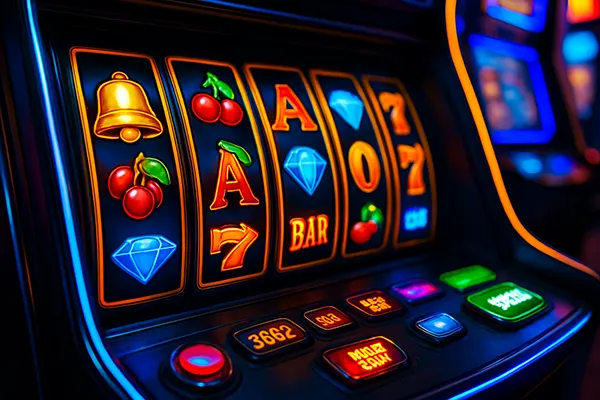
Sessions, Win/Loss Limits and Player Bankroll Outcomes
A session represents the period between starting and ending play on a particular slot. Since each spin is independent, the session has no effect on the machine’s internal behaviour, but it strongly influences the player’s experience. Bankroll fluctuations during sessions depend on volatility, hit frequency and payout distribution. Long losing segments and sudden high-value wins are statistically normal and must be anticipated.
Win and loss limits do not influence the machine’s decisions; instead, they serve as responsible gaming tools. Many operators in 2025 allow users to set personalised limits, including daily loss caps, deposit restrictions or mandatory cooldowns. These measures help players maintain control, especially in games with unpredictable variance.
Some jurisdictions also enforce mandatory maximum stake limits for online slots. For example, the UK continues to regulate spin speed and stake size to reduce high-risk play. Such rules affect session management but do not alter the underlying RNG mechanics. The outcomes remain random regardless of limit settings.
Understanding Realistic Expectations for Long-Term Play
No limit, strategy or pattern observation can change the mathematical house edge. RTP ensures that the machine retains a consistent advantage over long periods, even if individual sessions produce large wins. Establishing personal limits helps avoid chasing losses or extending sessions beyond safe boundaries.
Responsible session management also means recognising that high volatility can produce prolonged downswings. Even statistically fair games can deliver significant negative variance before a major win appears. Players often misinterpret this as manipulation, but it is a direct result of probability distribution.
The most effective approach is viewing each session as independent entertainment rather than trying to achieve alignment with long-term RTP. Structured bankroll planning provides more control than any attempt to “learn” the machine’s behaviour.